I am an author, educator, sociologist/anthropologist, and journalist who has been studying race, class, and gender issues in the American southwest and along the Mexican-U.S. border since 1976. My newest book is Hungry Oklahoma: Confronting Poverty and Food Insecurity. It is published by the University of Oklahoma Press and available from their website and from Amazon.com, etc. Here the podcast on the New Books Network here: Robert Lee Maril, “Hungry Oklahoma: Confronting Poverty and Food Insecurity” (U Oklahoma Press, 2026) – New Books Network.
Hungry Oklahoma: Confronting Poverty and Food Insecurity
In Oklahoma, one out of every six residents is poor. One in five children lives in poverty and faces food insecurity. In Hungry Oklahoma, native son and sociologist Robert Lee Maril follows in the tradition of the national bestsellers Nickel and Dimed and Evicted to illuminate the lived experience of poverty and food insecurity in communities across the state.
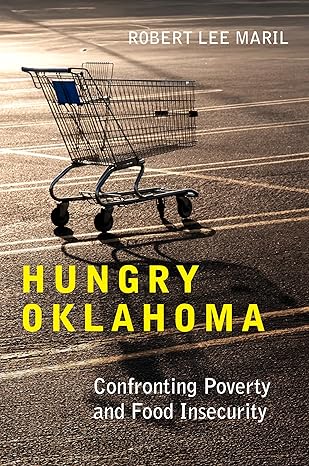
His account is immediately personal. It begins with “guests,” as shoppers are called by volunteers, waiting in line in the sweltering heat one summer for “Thy Will Be Done,” a food pantry, to open. Unable to afford air conditioning, some guests don’t buy foods that would spoil on the counter. One woman, Norma, carefully places only canned vegetables in her cart. When she returns to her twenty-year-old pickup, in the truck bed are lawn chairs, blankets, and pans—everything she owns. “The landlord told us this morning we was homeless,” Norma says. “I’m not thinking straight.”
Drawing on interviews and participant-observation data from his volunteer work at a food pantry, as well as census and other sociological data, he documents in rich ethnographic detail the status of poverty and low-wage workers in the state today and within historical context. Maril explores how institutions—such as faith-based organizations, government, and food pantries—structure and shape experiences of poverty. While he celebrates the nonprofit and faith-based efforts that make a difference, this book also is critical of conditions and stereotypes that have entrenched poverty in the state.Hungry Oklahoma ultimately suggests that persistent and pervasive poverty can be eliminated. Its moving accounts of real Oklahomans and their experiences make it a clarion call for not only those interested in policy issues but all Oklahomans who want a better today and tomorrow for those who call the state home.

